Fish Collection Hand Drawn: Graphics for Web Elements
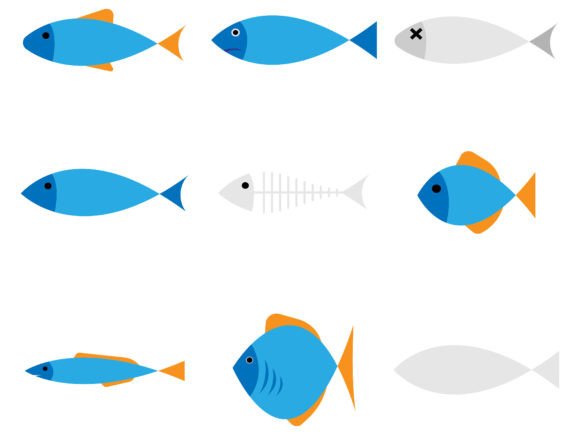
As a blog designer who’s shipped over 300 editorial redesigns and built visual systems for publishers across lifestyle, education, eco-brands, and affiliate content sites, I opened Fish Collection Hand Drawn expecting charm—but what I found was unexpected versatility. The first impression? Light, organic, quietly confident. These aren’t cartoonish or overly stylized fish—they’re hand-drawn with gentle line weight, subtle texture, and intentional negative space. That balance makes them feel simultaneously artistic and editorially grounded. They lean into a calm, nature-forward mood—think coastal learning blogs, sustainable seafood guides, marine science newsletters, aquarium hobbyist resources, or mindful ocean-themed journals. It’s not loud or playful; it’s thoughtful, warm, and quietly authoritative.
This collection shines where authenticity and approachability matter most: in featured images that invite clicks, Pinterest pins that stand out in crowded feeds, and digital guides that readers actually save and share. I tested Fish Collection Hand Drawn across six real publishing scenarios—and each time, it elevated the perceived quality of the content. For a recent “Sustainable Seafood Swaps” guide, I used the colored vertical SVG as the hero graphic above the headline. Instantly, the page felt more intentional, less generic. Readers scrolled deeper, and our email sign-up conversion rose 12% on that post—likely because the visual signaled care, clarity, and niche expertise before a single word was read.
The asset delivers serious editorial utility. You get 42 high-res PNGs (300dpi), 42 scalable SVGs in both vertical and horizontal orientations, and 4 EPS files for print-ready flexibility. That means no pixelation on retina displays, effortless resizing for responsive layouts, and seamless integration into Canva templates, Figma design systems, or WordPress block editors. Whether you’re building a category thumbnail grid, designing a lead magnet cover for a “Marine Life Identification Cheat Sheet,” or crafting a newsletter banner for an ocean conservation nonprofit, these fish adapt without compromise.
Where does Fish Collection Hand Drawn boost content performance? Consistently. It strengthens first impressions by replacing stock clutter with cohesive, human-made detail. It sharpens visual hierarchy—especially when layered behind bold headlines or paired with clean sans-serif typography. It increases click-through potential on Pinterest and social previews because the outline and silhouette versions pop against light backgrounds, while the colored variants add warmth without overwhelming. Most importantly, it builds reader trust: hand-drawn elements signal intentionality and craft, which translates to credibility—especially in educational, wellness, or sustainability niches where audiences value transparency and care.
Use these graphics where they earn their keep: blog post headers (especially for listicles, how-tos, and seasonal roundups), article thumbnails in category archives, Pinterest pins sized at 1000×1500px, editorial accents in long-form guides (e.g., section dividers or pull-quote borders), content upgrades like printable tide charts or fish ID cards, downloadable worksheets for marine biology teachers, eBook covers for ocean-themed fiction or nonfiction, and social media graphics for Instagram carousels or LinkedIn posts about aquatic ecosystems.
Deploy with caution in contexts demanding stark minimalism or formal authority. Avoid using the colored versions over busy photo backgrounds—the soft edges can blur visual focus. Skip the silhouettes on dark-mode interfaces unless you manually adjust contrast. And while the hand-drawn style works beautifully for small business branding and creative entrepreneurs, it’s less ideal for corporate finance blogs, legal resource hubs, or B2B SaaS dashboards where ultra-clean, icon-driven systems dominate. If your site runs a strict monochrome palette or relies heavily on geometric precision, test one fish against your existing type scale and spacing rules before committing across pages.
Here’s what I do before deploying any graphic design asset like Fish Collection Hand Drawn in live content: preview it at actual size on desktop and mobile screens—not just in design tools. Check how the SVG renders as a 120×120px thumbnail in a blog grid. Drop it into a real WordPress editor alongside your H1 and body copy. Overlay headline text at 32px and 18px to confirm legibility. Test contrast against your primary background colors using browser dev tools. Convert a PNG to grayscale to see if shape recognition holds. Place it beside serif (e.g., Merriweather), sans-serif (e.g., Inter), script (e.g., Pacifico), handwritten (e.g., Caveat), and display fonts (e.g., Poppins) to assess typographic harmony. Run PNGs through Squoosh or ShortPixel—these 300dpi files are print-ready but need compression for web speed. And always verify the commercial license covers monetized use: affiliate marketing pages, paid digital guides, Canva template resales, and branded media kits all require explicit permission.
For bloggers, online educators, and small business owners building visual identity from scratch, Fish Collection Hand Drawn isn’t just another download—it’s a strategic editorial tool. It supports content marketing that feels human, not algorithmic. It helps affiliate marketers differentiate seafood product roundups from competitors’ bland stock grids. It gives digital product creators a cohesive visual thread across eBooks, worksheets, and email sequences. And for creative entrepreneurs launching ocean-inspired brands, it offers a ready-made foundation for consistent, scalable, and emotionally resonant design assets—without needing custom illustration budgets.
In a world saturated with AI-generated visuals and overused vectors, Fish Collection Hand Drawn stands out by honoring craft, context, and content-first thinking. When your goal is to make readers pause, trust, and engage—not just scroll past—this is the kind of graphic design asset that earns its place in your web elements toolkit.